
Franchises Cancelled. Zero Ownership. The Unscripted Floor Is Being Pulled — Not Cracked.
Here’s Where Smart Producers Are Building Instead

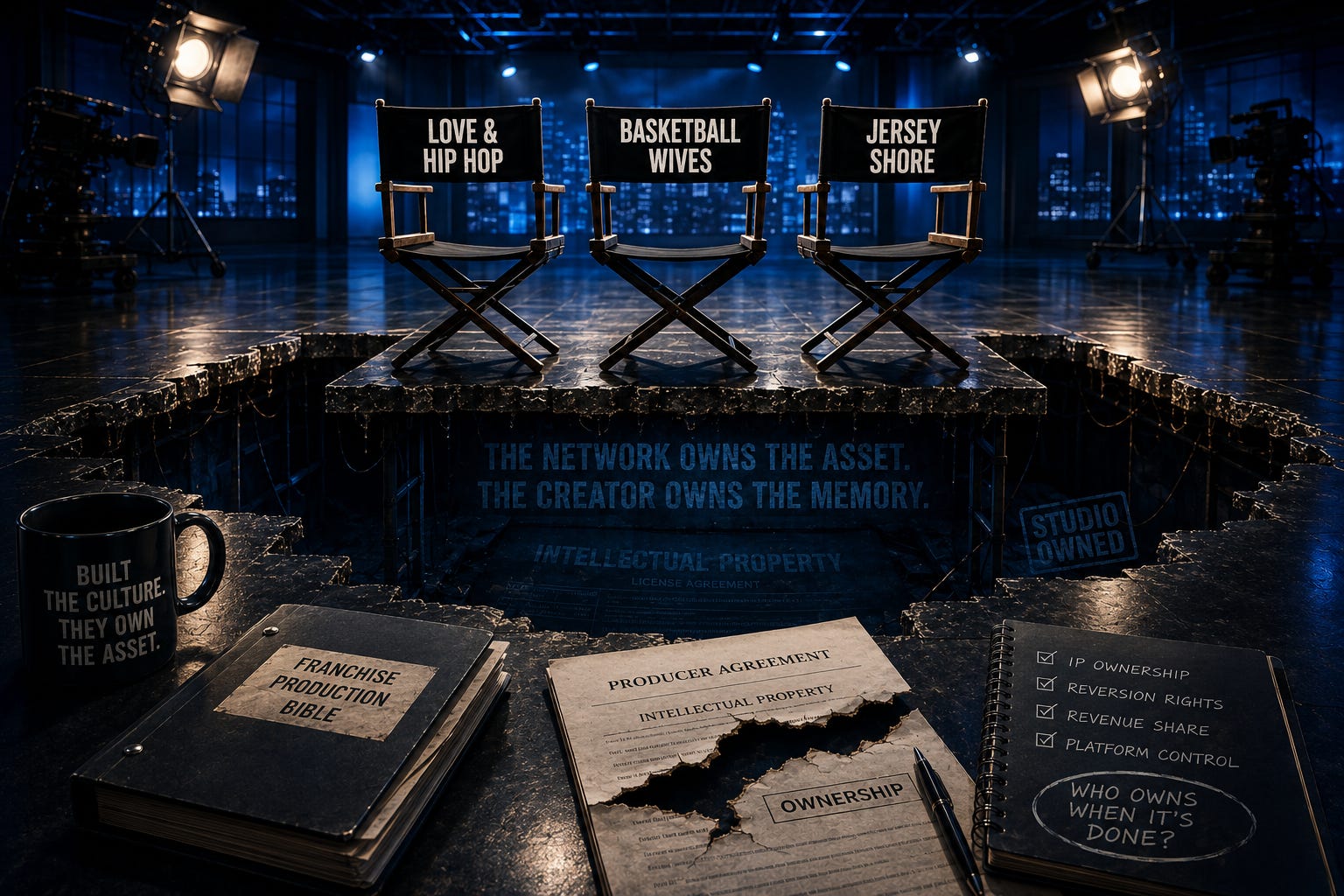
The floor is gone.
Unscripted commissions are down 31% while overall streaming viewership is up 18%. Read that again. Audiences didn’t leave. Buyers did. The networks and streamers that built empires on the backs of reality formats like Love & Hip Hop, Basketball Wives, Wild ‘N Out — are cutting orders, compressing fees, and replacing production companies at will. And the producers who built those franchises are left with credits, relationships, and a lawsuit.
Nick Cannon created Wild ‘N Out in 2005. Built the culture around it. Hosted it for twenty years. Then tried to take a version of his own show to Zeus Network and Viacom sued him. A federal judge just refused to dismiss the case. The trademark claims are strong enough for trial.
He built the franchise. They own it.
That’s not bad luck. That’s the structure.
I’ve watched this for over twenty five years. I know what it looks like when a creator builds something real inside a system that was designed to own what they build. I also know what the alternative looks like. I lived it. And what I know is this:
Verticals are Bravo in 2004.
The platforms are new. The format rules aren’t set. Nobody has decided at scale who owns what. Taye Diggs just launched a distribution platform - not a show, a platform - because he read the same window.
The question isn’t whether to enter this format.
The question is whether you’re going to negotiate like it’s 2004 or sign a deal like it’s 2015.
👩🏾💻 LET’S DECODE THIS
Pattern 1: The Unscripted Floor Didn’t Crack - It Was Pulled
Pattern 2: The Phone Just Beat Netflix. Not Metaphorically. Literally.
Pattern 3: Taye Diggs Didn’t Make a Show. He’s Building a Studio.
Pattern 4: Issa Rae is Running the Play She Learned in 2011
Pattern 5: The Pipe Is New. The Trap Is Old.
Pattern 1: The Unscripted Floor Didn’t Crack - It Was Pulled
Here’s what the numbers actually say.
Unscripted series commissions fell 31% year over year in 2025. In the same period, original streaming consumption rose 18% and series viewing jumped 21%. More people are watching. Fewer shows are getting made. That gap is not a ratings story. It’s a leverage story.
The audience didn’t abandon non-scripted. The buyers did.
And they did it for the same reason they always consolidate power — because they could. The merger era handed fewer companies control over more pipeline. When Paramount, VH1, and WBD started rationalizing their slates, unscripted took the first hit. Not because the format stopped working. Because the format was always structured so that the network owned the asset and the producer owned the labor. When the buyer pulls back, the producer has nothing to fall back on. No IP. No library. No leverage.
This is what the end of a closed window looks like.
Love & Hip Hop became one of the highest-rated unscripted franchises in cable history. 485 episodes. 30 seasons. Four cities. 15 years. Mona Scott-Young created it, built it, and EP’d every version of it. The IP sits with Viacom. Last week, Paramount announced the entire franchise is being cancelled, closing with a six-part farewell special this fall. Mona serves as EP on the goodbye. On her show. On their timeline.
Shaunie O’Neal created Basketball Wives from her own life and relationships, produced it for over a decade, grew it to twelve seasons. In 2018, VH1 removed her production partner without her consent and reportedly threatened to dissolve her producing role entirely. This January, Basketball Wives was cancelled. Shaunie announced it herself on Instagram, gracefully, gratefully, calling it growth. Notice she didn’t say she was taking it somewhere else.
She couldn’t. The show isn’t hers to move.
Nick Cannon created Wild ‘N Out in 2005. Built the culture around it. Hosted it for twenty years. Then tried to take a version of his own format to Zeus Network — and Viacom sued him. A federal judge refused to dismiss the case two weeks ago. The trademark claims are going to trial.
He built it. They own it.
Love & Hip Hop - 485 episodes, 15 years, cancelled by Paramount last week. Mona EP’s the farewell on Viacom’s terms.
Basketball Wives - 12 seasons, cancelled in January. Shaunie announces it on Instagram and calls it growth because that’s the only framing available to her.
Wild ‘N Out - Nick Cannon tries to take his own format elsewhere. Gets sued. Case going to trial.
Three Black creators. Three franchises that defined an era of unscripted television. Three different endings that arrive at the same place: the network owns the asset. The creator owns the memory.
That’s not three bad deals. That’s the structure.
I’ve watched this for twenty five years. I know what it looks like when a creator builds something real inside a system that was designed to own what they build. I also know what the alternative looks like. I lived it.
In 2004, I produced Being Bobby Brown at Bravo. Bravo was new. The genre was new. And because the platform needed content more than it needed to define what it owned, I was able to negotiate a small licensing window for the network and retain ownership of the series and all the content. Twenty years later, we still own it.
That conversation would not have happened at VH1 in 2015. The window had closed.
The Surreal Life producers knew the same thing. They got in early at VH1 before the network figured out what it had. Same window. Same result.
Here’s what I need you to understand right now.
Verticals are Bravo in 2004.
The platforms are new. The format rules aren’t set. Nobody has decided at scale who owns what. Taye Diggs just launched a distribution platform not a show, a platform because he read the same window.
The question isn’t whether to enter this format.
The question is whether you’re going to negotiate like it’s 2004 or sign like it’s 2015.
Watch what they do. Not what they say.

Pattern 2: The Phone Just Beat Netflix. Not Metaphorically. Literally.
In Q4 2025, ReelShort, a micro-drama app most traditional television producers have never heard of, averaged 35.7 minutes of daily viewing per user. Netflix averaged 24.8 minutes. Amazon Prime Video averaged 26.9 minutes. Disney+ averaged 23 minutes.
An app built for 90-second vertical episodes, filmed in portrait mode, featuring largely unknown actors, beat every major streaming platform in daily engagement.
The numbers are not small. The global vertical video market is projected to hit $14 billion this year. Outside China, the U.S. leads all international markets. ReelShort alone pulled approximately $400 million in revenue in 2024. DramaBox averaged 44 million monthly active users in the first half of 2025, more than Hulu and Paramount+ combined.
Last week, Netflix launched Clips, a vertical video discovery feed now live in nine markets. Disney+ announced plans for short-form vertical content later this year. Fox Entertainment committed to producing 200 vertical titles for a Chinese-owned platform called MyDrama over the next two years. Paramount and Lionsgate are already in partnership conversations with ReelShort.
When Netflix, Disney, Fox, Paramount, and Lionsgate all move in the same direction in the same quarter, that’s not experimentation. That’s capitulation.
Anthony Zuiker created CSI in 2000. The franchise ran across four series, fifteen-plus seasons, and became one of the most-watched television franchises in broadcast history. He is now writing for GammaTime, a vertical drama platform, in 90-second episodes. When the architect of broadcast television’s most durable procedural franchise pivots to a format most network executives still haven’t greenlit, something fundamental has shifted. Not about the format’s prestige. About where the creative infrastructure is actually being built.
The audience for verticals is primarily women. The dominant genres are romance, family betrayal, power dynamics, and comeback narratives. That is the exact same audience that built Love & Hip Hop, Basketball Wives, and Being Bobby Brown. The audience that non-scripted television was built on didn’t go anywhere. The format found them where they already were on their phones, watching 35 minutes a day on an app the trades weren’t covering two years ago.
The pipeline that served that audience just collapsed. The format replacing it is exploding. And the window to own your position inside it is open right now.
Watch what they do. Not what they say.
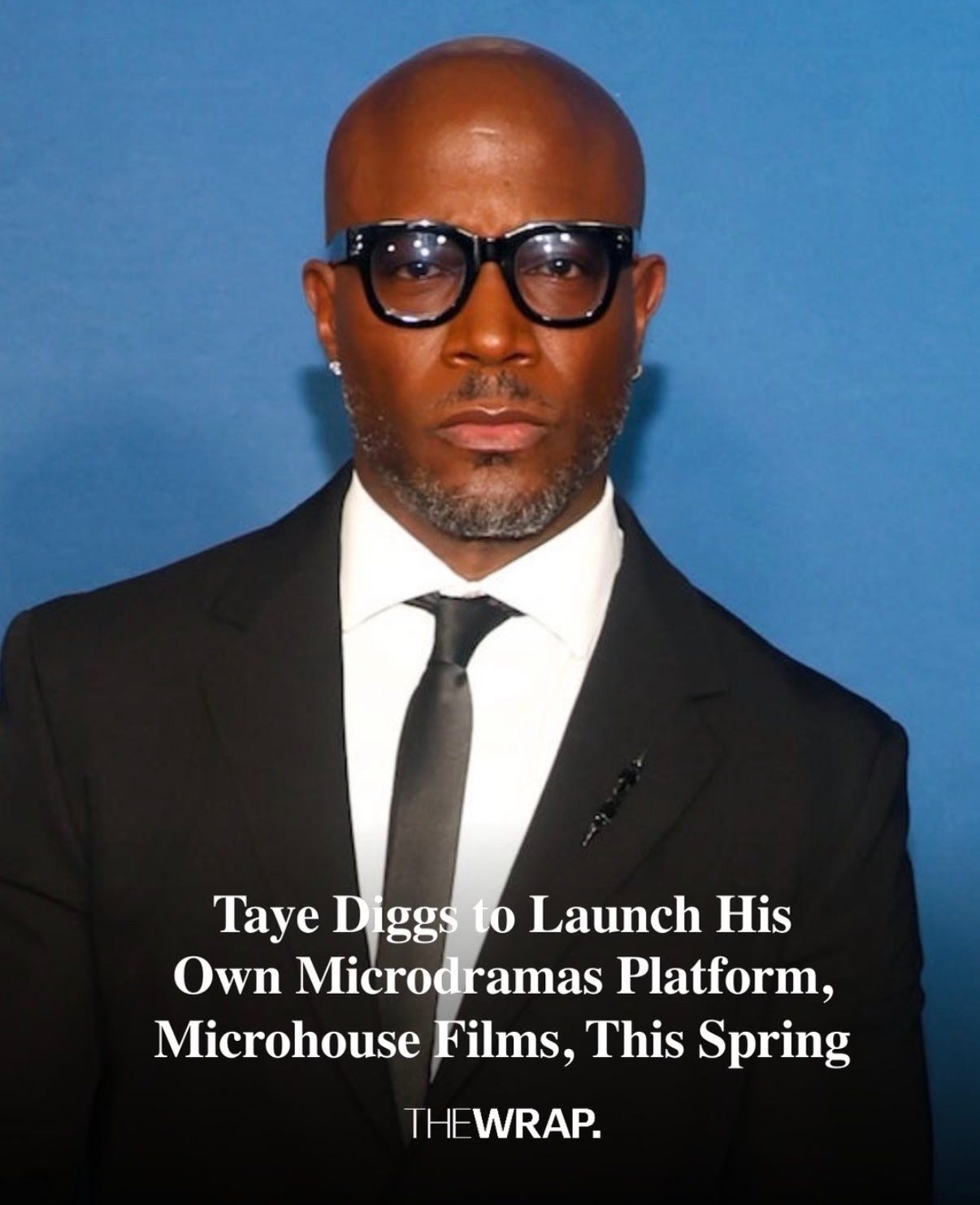
Pattern 3: Taye Diggs Didn’t Make a Show. He’s Building the Studio.
Most talent entering a new format takes the obvious move. They star in something. They attach their name. They collect the check and the credit and wait to see if the format sticks.
Taye Diggs did something different.
In January 2026, Diggs starred in Off Limits & All Mine for CandyJar, a romance featuring a Black ensemble, produced in Atlanta, on a platform explicitly committed to putting Black-led stories at the center of the vertical boom rather than its margins. That was the learning.
Then in March, he executive produced Tides of Temptation for Lifetime, a micro-drama built as a companion piece to a Lifetime movie, expanding the story universe across formats. That was the testing.
Last week, he launched Microhouse Films.
Not a show. A platform. A mobile-first vertical storytelling studio where creators produce, distribute, and monetize their work inside a single infrastructure with no upload fee, no hosting fee, and no subscription cost. Creators control which episodes are free and which sit behind an in-app coin paywall. Creators retain their pricing strategy. Creators keep their revenue share.
Read that again. Because that sentence has never existed in a traditional network deal.
Diggs said it plainly: the goal is to build a model that supports creators in this next phase and allows them to keep telling stories. His partners said it even more directly: this is an opportunity to redefine who benefits in the new ecosystem, putting control in the hands of filmmakers.
That language is not promotional. That’s a deal structure.
Here’s the pattern Diggs ran: make one to learn the format, produce one to understand the infrastructure, then build the thing you wish had existed when you walked in. Three moves. Executed in under twelve months.
That’s not a talent strategy. That’s a producer strategy.
You don’t enter a new ecosystem and demand terms on day one. You build enough understanding of the format that your leverage is real, then build the infrastructure that makes you indispensable to everyone who comes after you.
Watch what they do. Not what they say.
Pattern 4: Issa Rae is Running the Play She Learned in 2011
In 2011, Issa Rae launched The Misadventures of Awkward Black Girl on YouTube. No network. No greenlight. No gatekeeper between her and her audience. She built the show, built the audience, and used that leverage to walk into traditional television on her own terms. Insecure at HBO was the result.
That’s the outside-first model. Build outside the system. Use what you built to negotiate inside it.
Then the system did what systems do.
After Insecure ended, Rap Sh!t was cancelled by Warner Bros. Discovery after two seasons. HBO passed on a wrestling series she developed with Dwayne Johnson. Sweet Life: Los Angeles was cancelled after two seasons. Show after show, project after project, the post-2020 diversity commitments evaporated exactly as the Wall Street pressure on media conglomerates intensified.
Rae named it directly. “I’ve never seen Hollywood this scared and clueless, and at the mercy of Wall Street.” She told Porter she was keeping an eye on methods to move toward independent production if the tides kept flowing in the same direction. “You’re seeing so many Black shows get canceled. You’re seeing very clearly now that our stories are less of a priority.”
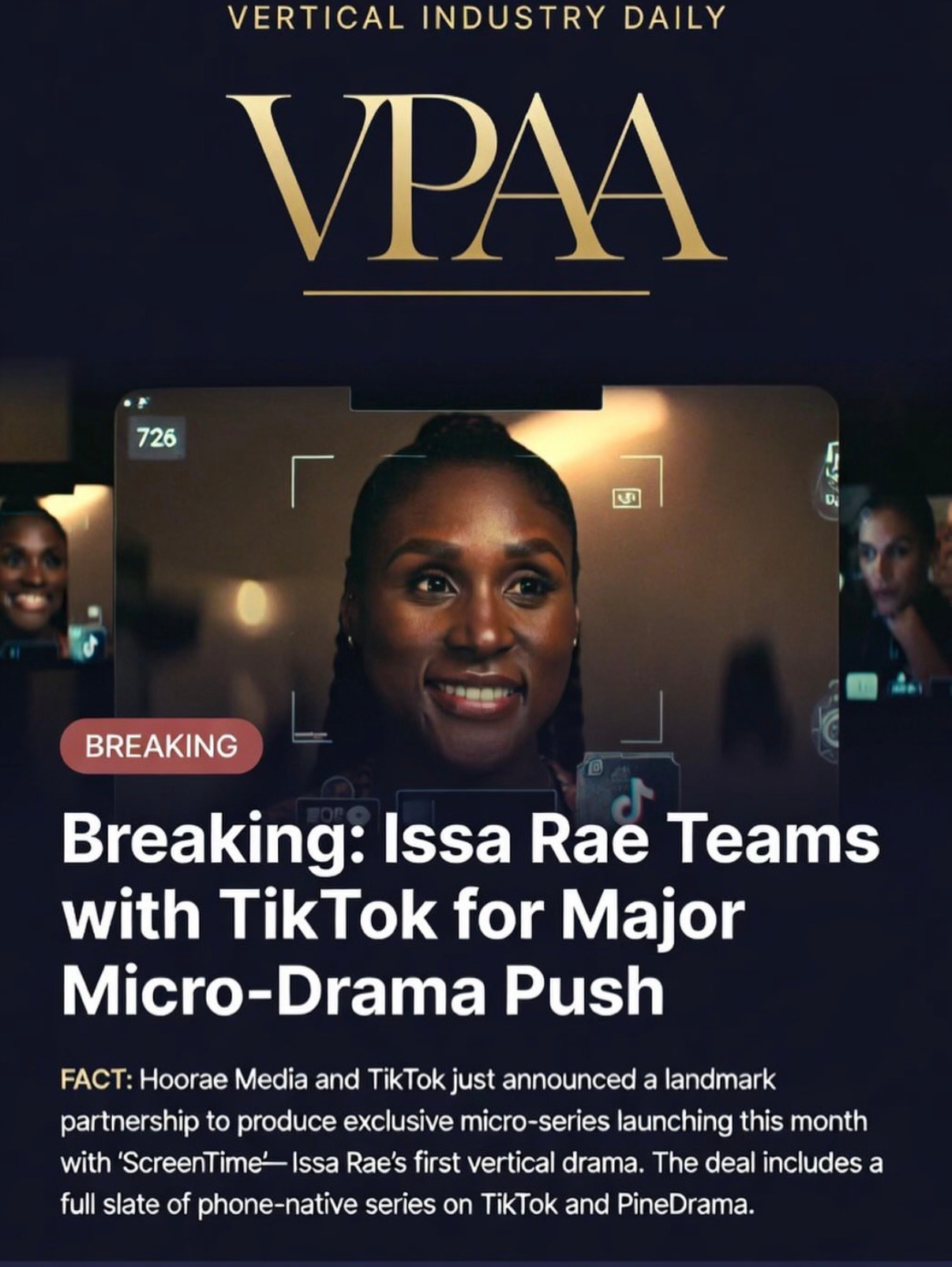
In April 2026, she ran the outside-first play again.
Hoorae Media announced a partnership with TikTok to premiere Screen Time, a micro-drama series exclusively on TikTok and its new app PineDrama. Twenty-seven episodes. Free. Ad-supported. SAG cast. Fully produced. The deal includes a co-development slate of additional micro-series.
She didn’t wait for a network to greenlight a microdrama. She went directly to the distribution platform, brought her production company, and structured a deal that creates a pipeline, not a one-off.
But here’s the question the trades aren’t asking: who owns the content produced under that deal?
The series air exclusively on TikTok and PineDrama. TikTok is the distribution channel and the co-development partner. There is no public reporting confirming that Hoorae retains IP ownership of what gets made. Which means the deal may be exactly what it looks like on the surface a brilliant distribution strategy without being what every independent producer actually needs it to be: an ownership model.
This is the tension at the center of the vertical opportunity right now.
Issa Rae saw the traditional system fail Black creators including herself, repeatedly. She moved toward a new platform before the rules calcified. That instinct is exactly right. The question of whether she owns what she’s building there is the question every producer entering this format needs to answer before they sign.
Because the outside-first model only works twice if the second time you own what you build.
Watch what they do. Not what they say.
Pattern 5: The Pipe Is New. The Trap Is Old.
The vertical format is new. The ownership structure being built around it is not.
ReelShort is owned by Crazy Maple Studio, a Chinese company. DramaBox is owned by Dianzhong Technology, another Chinese company. MyDrama is owned by Holywater, a Ukrainian company, with Fox Entertainment holding an equity stake. TikTok’s PineDrama operates under a newly formed U.S. joint venture, majority-owned by American investors including Oracle, Silver Lake, and MGX. ByteDance retains a 19.9% minority stake. Oracle controls the algorithm and data infrastructure. The ownership is American on paper. The architecture is more complicated than that.
Now watch what Hollywood is doing.
Fox Entertainment committed to producing 200 vertical titles for MyDrama over two years. Paramount is in partnership with ReelShort. Lionsgate is in conversations. The major studios are rushing to supply content to platforms they don’t own, on terms that are still being defined, in a format where IP ownership standards haven’t been established yet.
Read that sequence carefully.
Because you’ve seen it before.
Black creators built the culture of VH1 and BET. The networks owned the IP. The creators owned the credits. When the networks decided to cancel, restructure, or replace production companies, there was nothing the creators could do. The pipe belonged to someone else.
The vertical ecosystem is being built on the same architecture — just with different flags on the building.
That doesn’t mean don’t enter the format. It means enter it the way Taye Diggs entered it. He didn’t rush to supply content to someone else’s platform. He built his own distribution layer first. Microhouse Films has no upload fee, no hosting fee, no subscription cost. Creators control their pricing. Creators control their revenue. Creators decide which episodes are free and which are monetized.
That’s not a content deal. That’s an ownership position.
Here’s the question every independent producer needs to answer before they sign anything in this space: are you supplying content to someone else’s pipe — or are you building equity in the infrastructure itself?
The format is new. The trap is old. And the window to choose which side of that line you’re on is closing faster than most producers realize.
The Bravo window that made Being Bobby Brown possible didn’t stay open long. The VH1 window that the Surreal Life producers walked through closed inside of five years. The vertical window is measured in months not years because AI is compressing production costs, Chinese platforms are scaling at a volume Hollywood can’t match, and the major studios are already moving to lock in their positions.
The producers who own something in this format five years from now are the ones negotiating ownership today before the platforms decide what’s standard, before the lawyers write the boilerplate, and before “unprecedented” becomes the answer to every ownership conversation.
That’s not unprecedented. That’s just timing.
Watch what they do. Not what they say.

THE PLAYBOOK
Three moves to consider.
1. Audit your existing IP before you pitch anything new.
Before you chase a vertical deal, look at what you already own or have direct access to. Artist relationships. Estate access. Doc IP that never got produced. Formats you created but never fully controlled. The vertical format runs on serialized emotional narratives - romance, betrayal, comeback, power dynamics. If you have IP that fits that architecture and you own it, you walk into any platform conversation with leverage the next producer in line doesn’t have. Don’t enter a new format empty-handed when your catalog may already be holding the key.
2. Before you sign, ask four questions.
The vertical space is moving fast and whoever signs first without pushing back is setting the boilerplate. Before you commit to anything, get answers to these four questions in writing:
• Who owns the IP when this deal is done?
• What is the rights reversion timeline and what triggers it?
• What happens to your content if this platform is acquired or shuts down?
• What is your revenue share on monetized episodes and how is that calculated?
If the answers aren’t in the contract, they don’t exist. “We’ll work it out” is how creators end up where Mona Scott-Young ended up EP-ing the farewell to their own franchise on the network’s timeline.
3. Run the Diggs sequence. Don’t skip steps.
Make one to learn the format. Produce one to understand the infrastructure. Then negotiate from knowledge not urgency. Taye Diggs didn’t walk into the vertical space and demand platform ownership on day one. He starred in a CandyJar project in January, EP’d a Lifetime companion piece in March, and launched Microhouse Films in April. Three moves in under four months each building the fluency for the next conversation. The window in this format is short. But entering it without understanding what you’re signing is how you trade one closed window for another. Build enough format knowledge that when you negotiate, your leverage is real.
YOUR MOVE THIS WEEK
Take one project in your development slate, or one piece of IP you own outright, and ask yourself whether it can be told in 90-second serialized episodes with cliffhanger structure.
If the answer is yes, don’t pitch it to a network first.
Research which vertical platforms are actively seeking Black-led content, what their current deal structures look like, and whether any of them have a model that allows creator IP retention. That research takes three hours. The leverage it creates lasts for the life of the deal.
The window is open. Do the work before someone else defines what’s standard.
MY PLAYBOOK UPDATE
Lots happening that I can’t yet share but I want you to know that things are moving.
I’ve been in this garden long enough to recognize the signs. The soil has been worked. The seeds have been planted. And when I look at where things stand right now across several projects, I believe the harvest is in sight.
I’ll share more when I can. Until then, I’m doing exactly what I’m telling you to do.
Staying in the room. Negotiating from knowledge. And refusing to let urgency replace strategy.
The season is turning. Watch this space.
THE FINAL PLAY
You just watched three Black creators - Mona Scott-Young, Shaunie O’Neal, Nick Cannon build franchises that defined an era of American television. Combined: over 700 episodes. Decades of cultural influence. Audiences in the millions.
None of them own what they built.
Now a new format is arriving with the same audience, the same emotional DNA, and the same opportunity the early days of Bravo and VH1 presented. The platforms are new. The rules aren’t set. The window is open.
The only question is whether you’re going to treat this moment like information — or like leverage.
Information says: interesting, I’ll watch how it develops.
Leverage says: I’m going in now, before the boilerplate gets written, before “unprecedented” becomes the answer, and before someone else defines what independent producers can and cannot own in this format.
I produced Being Bobby Brown in 2004 because Bravo was new and I understood that a new platform needs you more than it needs to control you. Twenty years later I still own it.
That window existed once before. It exists again right now.
What are you going to do with it?
👀 WHAT I’M WATCHING
The union conversation in verticals. SAG actors appeared in Issa Rae’s Screen Time. That’s the first signal that the format is moving toward standardization and standardization is how platforms lock in what they’ll accept as standard deal terms. Once that happens, the ownership conversation becomes the same fight it was at VH1 in 2010. I’m watching how fast SAG moves to establish vertical-specific contracts and whether those contracts address IP ownership or only compensation.
Which Black-owned production companies move into verticals with an ownership position over the next year not a content deal, an ownership position. The Diggs and Rae moves got the headlines. But the independent producers who move quietly into this space over the next year are the ones worth watching.
The Paramount-WBD merger and what it means for the unscripted producers currently in their pipeline. When two of the biggest unscripted buyers consolidate, the slate compression that follows is where the next wave of producers gets displaced. Some of them will scramble for the next network deal. The smart ones will be reading this newsletter and moving toward a format where they can negotiate before the rules are set.
SHARE THIS QUOTE
“The producers who own something in this format five years from now are the ones negotiating ownership today — before the platforms decide what’s standard, before the lawyers write the boilerplate, and before ‘unprecedented’ becomes the answer to every ownership conversation.”
— Tracey Baker-Simmons, TvDecoded
IF THIS WAS VALUABLE
TvDecoded exists because information asymmetry is the oldest tool in the industry’s playbook and the only way to dismantle it is to share what we know.
This newsletter is free. It will stay free. But the research, the fact-checking, the pattern analysis, the deal decoding - that takes real time every week. If this issue gave you something you can use in your next negotiation, your next pitch, or your next conversation about what you do and don’t own, consider becoming a paid subscriber. It’s the most direct way to keep this work going at the level it needs to be.
If you’re not ready to go paid, share this issue with one producer, one creator, or one person in your network who is entering a new format right now and hasn’t yet asked who owns what when the deal is done.
That one share is how we get from 475 subscribers to 500. Then to 1,000. Then to the point where the information asymmetry that has defined this industry for decades starts to actually close.
The window is open. Share it while it matters.
Become a paid subscriber - support the work that supports your leverage.