
The Paramount Vote Is Here
Why Smart Producers Are Building Outside the System


The Paramount-Warner Bros. Discovery shareholder vote is this week, April 23. Three days from today.
Three thousand industry professionals signed an open letter. The Teamsters filed formal opposition with the Department of Justice. The California Attorney General opened an antitrust examination. A publication got its ads pulled because its columnist was photographed with protest buttons at CinemaCon.
And the vote is still happening on April 23.
That is the signal. Not the opposition. The signal is what happens to the opposition.
The Paramount vote is their strategy. Consolidation, leverage through scale, control of distribution infrastructure. That is the play the majors have always run. The question this newsletter exists to answer is: what is ours?
This week we decode why building outside the system is not a consolation prize. It is the smarter play. Kennedy Ryan just proved it. Jason Lee proved it. The states building thirty-year production infrastructure are proving it. And today, the Obamas proved it. Higher Ground is leaving Netflix to go fully independent after eight years.
The Paramount vote is their strategy. Building outside the system — audience, IP, production entity, revenue structure — is ours.
👩🏾💻LET’S DECODE THIS
Signal #1: 3,000 Signatures, a Pulled Ad, and a Vote in 3 Days. Is the Opposition Too Little Too Late?
Signal #2: Kennedy Ryan Just Got a First-Look Deal at Universal. In a Market Where Deals Are Getting Cancelled.
Signal #3: Jason Lee Owns His Show at BET. He Said It Out Loud. That’s the Model.
Signal #4: States Aren’t Just Hosting Productions. They’re Building Revenue Engines.
ABOUT TVDECODED
TvDecoded is published weekly by Tracey Baker-Simmons — television Executive Producer with 30 years of credits across Hulu, Peacock, A&E, Bravo, VH1, BET, Showtime, and Lifetime. Credits include Being Bobby Brown, Sprite Step Off, The Houstons, and the Bobbi Kristina biopic. The founding thesis: Unprecedented is a negotiation tactic, not a description of what’s possible. Subscribe at tvdecoded.substack.com
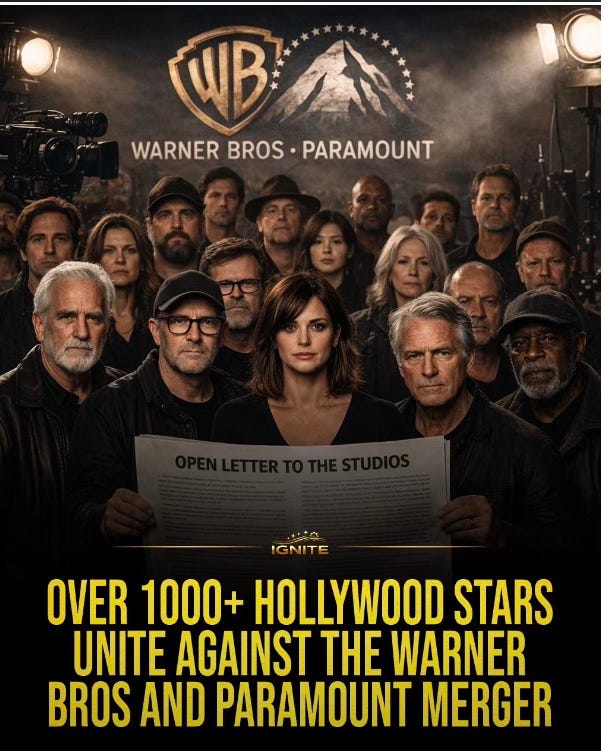
SIGNAL #1: 3,000 Signatures, a Pulled Ad, and a Vote in 3 Days. Is the Opposition Too Little Too Late?
The Warner Bros. Discovery shareholder vote on Paramount’s $111 billion acquisition is scheduled for April 23. The board unanimously approved the deal. Shareholder approval is widely expected.
In the weeks before the vote, over 3,000 film and television professionals, Denis Villeneuve, Florence Pugh, J.J. Abrams, Jane Fonda, Kristen Stewart, among them signed an open letter at BlockTheMerger.com declaring unequivocal opposition. The Teamsters, representing 1.3 million members including nearly 15,000 Motion Picture Teamsters, formally submitted a detailed report to the DOJ’s Antitrust Division calling for the deal to be blocked unless enforceable labor and domestic production protections were guaranteed. California’s Attorney General and Democratic AGs in New York opened antitrust examinations.
Then Paramount pulled its advertising from The Ankler after editorial director Richard Rushfield was photographed at CinemaCon with a bag of “Block the Merger” buttons he was delivering to members of the Future Film Coalition. Paramount also directed its employees not to cooperate with the publication until further notice. Rushfield’s response: “If it isn’t censorship, what is it? You tell me a better word.”
The vote is still happening on April 23.
The Pattern
Watch what they do, not what they say.
The board said yes. The shareholder vote is formality dressed as democracy. The real regulatory friction is the UK’s Competition and Markets Authority, the European regulators — comes after the vote, not before it. Analysts who have covered this closely are clear: the vote is step nine of approximately forty-seven. The concessions required to satisfy international regulators are where the actual deal value gets negotiated. The open letter does not touch that process.
So what was the open letter for? It was for the record. Three thousand names on a document that says: we told you this was coming, we named it, we opposed it. That record matters more after the merger than it does before it. When the first round of layoffs hits, when the mid-budget slate disappears, when a production unit gets absorbed and eliminated. The record already exists. It cannot be rewritten.
The Ankler ad pull is a separate signal inside the same story. Paramount did not pull those ads to silence The Ankler. The Ankler will continue publishing. Paramount pulled those ads to show every other outlet, every other journalist, every other publication that covers this space what the cost of public opposition looks like. That is information asymmetry deployed as discipline. You do not have to threaten everyone. You make one visible example and let the industry calculate the risk themselves.
CNN’s booker reportedly turned away a guest booked for a merger opposition segment the same week. The network backpedaled after the decision became public. These things are connected.
The Leverage Lesson
Too little too late is a frame that assumes the goal was stopping the vote. That was never realistic once the board voted yes and Ellison had the capital. Opposition that cannot stop an outcome still builds a record. Three thousand names on a document saying we told you this was coming. That record matters more after the merger than before it, with regulators, with press, with every future counterparty who needs to know who stood up and who went quiet.
The Ankler situation is the cleaner lesson. Their revenue was partially tied to the ad spend of a company they were covering critically. That dependency was the vulnerability Paramount exploited. If you are building a media platform — a newsletter, a content brand, a production company — the question is not whether you will ever oppose a company that also funds your access. The question is whether your revenue structure survives when they decide to make an example.
I built TvDecoded funded directly by readers, not by the companies I analyze. That is not a coincidence. That is the structure.
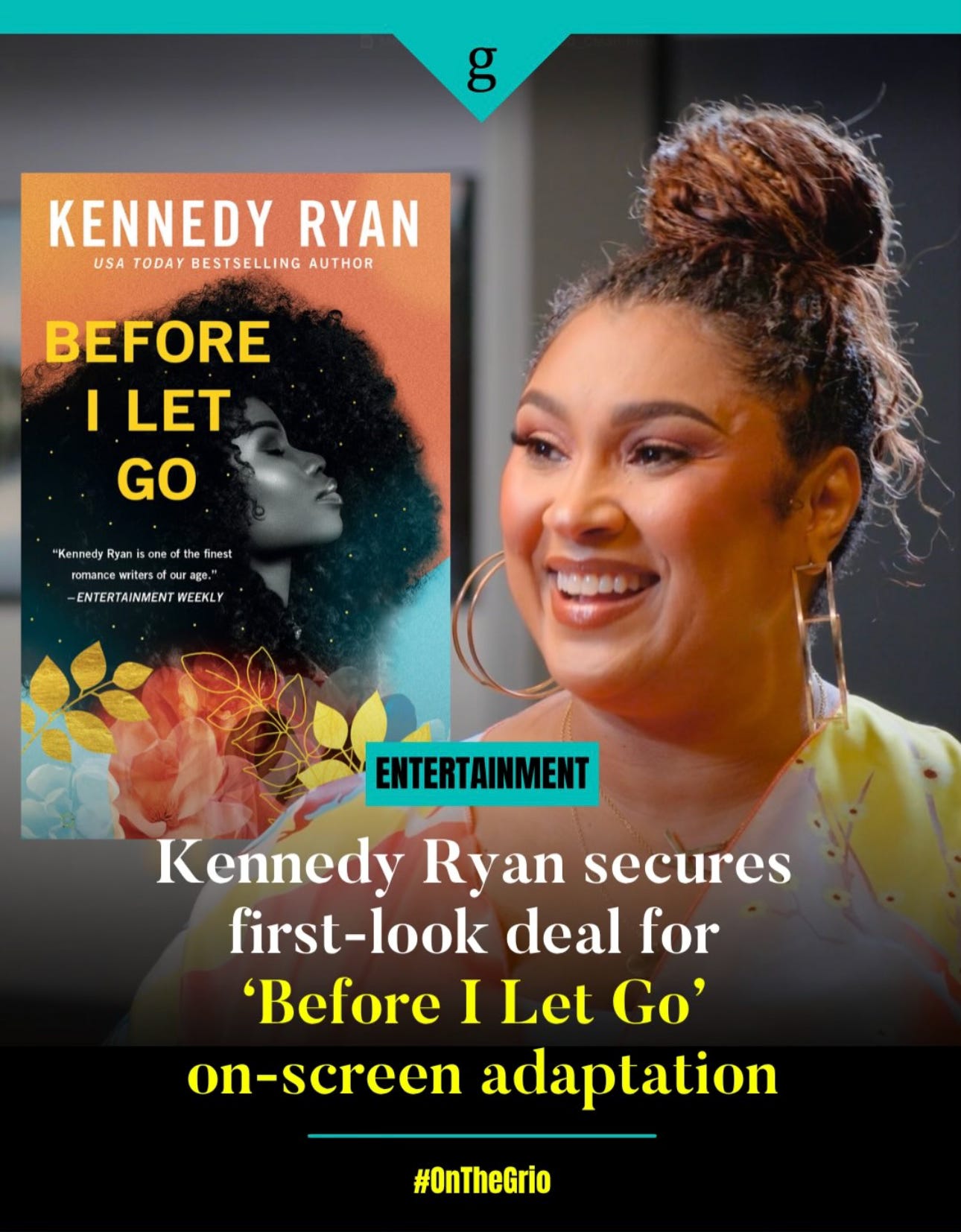
SIGNAL #2: Kennedy Ryan Just Got a First-Look Deal at Universal. In a Market Where Deals Are Getting Cancelled. Here’s Why.
This week, New York Times bestselling romance author Kennedy Ryan announced a first-look deal with Universal Studio Group. Under the terms, Ryan will develop and produce series for a variety of platforms and create original IP for USG to adapt for television, under her own production banner, Scribe Chick Media. The deal is not just for her own work. She is also set up to shepherd other authors’ stories from page to screen.
First up is Before I Let Go, the first book in her Skyland series, in development as a series at Peacock. Ryan will co-write and executive produce. Malcolm D. Lee — the architect of The Best Man franchise and Girls Trip — is set to direct and executive produce. Also on the EP list: John Legend, Debra Martin Chase, Mike Jackson, and Ty Stiklorius.
Ryan is the first Black author to win the RITA Award, the highest honor in romance fiction. She has a devoted readership that calls itself the Queens of Hugs. Her books have waited years for this screen moment. Before I Let Go published in November 2022. The Peacock development was first announced in April 2023. The first-look deal with USG just closed.
She said it plainly: “It’s not only the chance to extend the reach of my own brand and content, but also stories that amplify themes relevant to underrepresented communities, and shepherd those stories by other authors from book to screen.”
The Pattern
In a market where development deals are being cancelled, production slates are shrinking, and studios are consolidating overhead, Kennedy Ryan just landed a deal that puts her name on a production banner, gives her a platform deal at Peacock, and extends her reach to other authors’ IP. That does not happen because the market is generous. It happens because she walked in with assets the studio could not manufacture.
The asset is not just the book. The book has been in development since 2023. The asset is the audience, millions of readers who have already pre-qualified themselves as consumers of this story. They are proof of demand, not a marketing strategy. Universal is not betting on whether people will want this story. The audience already exists. USG is buying access to a distribution relationship Kennedy Ryan built before she ever walked into that room.
This is the same pattern as Jason Lee at BET, from a completely different entry point. Lee built a media platform and negotiated a licensing deal. Ryan built a literary audience and negotiated a production deal with her own banner attached. Both walked in with something the institution needed and could not replicate on its own.
The Leverage Lesson
The Scribe Chick Media banner is the part of this deal that matters most for other creators to study. Ryan is not just getting a show made. She is developing IP, her own and other authors’, under her name, inside a studio structure, with a platform commitment attached. That is a different position than: studio options your book, makes the show, you get an EP credit and a fee. In that version, the studio owns the asset. In Ryan’s version, the production entity is hers.
The deal structure reflects what she brought to the table: existing IP with a proven audience, a track record as a first-in-class author in her genre, and a clear creative vision for how her work translates to screen. Those three things together changed the terms of what was possible.
The lesson is not “write a bestselling novel.” The lesson is: the stronger and more specific the asset you bring into the room, the more of the deal structure you can control on the way out. Audience is the asset. Ownership of the production entity is the outcome.
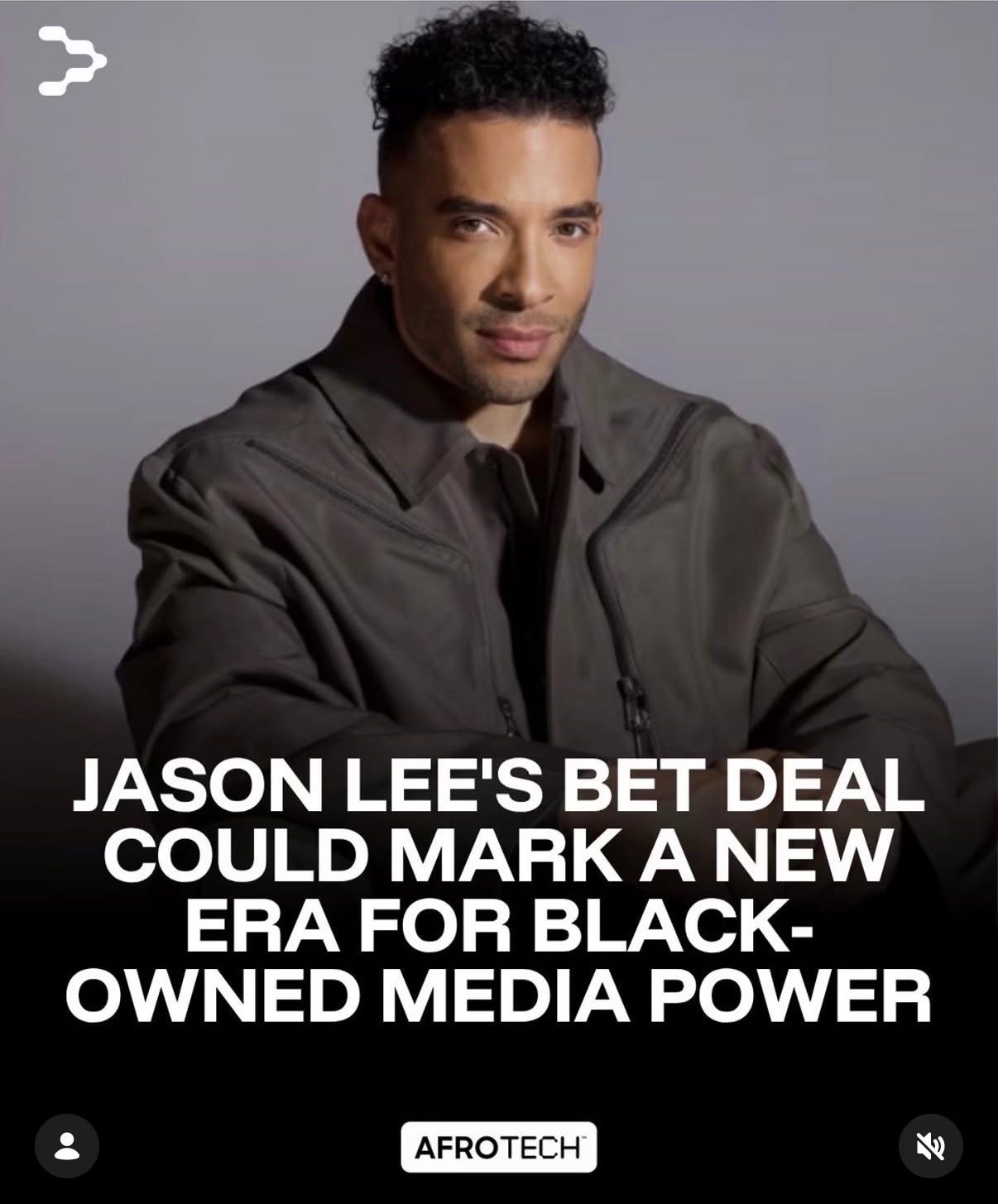
SIGNAL #3: Jason Lee Owns His Show at BET. He Said It Out Loud. That’s the Model.
BET launched its Creator Studio on March 30, 2026, with The Jason Lee Show as its flagship series, debuting April 8 on BET.com and BET’s YouTube channel. The Studio is positioned as infrastructure for Black creators, pairing talent with BET’s distribution, resources, and platform reach.
Lee’s deal structure is the story. He said it in plain language: “My deal with them is that I own my content. I own my show. It’s a licensing deal. Ownership is real freedom.”
BET’s SVP of Digital and Social Orchid Richardson framed it from the platform side: “Black creators have always driven culture, now we’re giving them the infrastructure to own it.”
Lee previously approached BET years ago alongside Queen Latifah and was turned down. His explanation: “They just thought I wasn’t ready, so I went and did the work.” He built Hollywood Unlocked into a multi-million dollar Black-owned media empire. He returned to BET with the audience he had built in the years between.
The Pattern
Lee did not get a BET deal and then build an audience. He built the audience and then the deal changed structure. That sequence is not accidental. The audience was the leverage that produced the licensing deal instead of an assignment. Without the audience, there is no ownership. Without the ownership, there is no licensing deal. The leverage creates the terms. Compare that to the traditional development deal: the network owns the format, the IP, and the distribution. The creator gets a producing fee and a first-look that locks them into the relationship without giving them the upside. That is the default structure when you walk in without leverage. Lee did not walk in without leverage.
I have been in rooms where networks called ownership retention unprecedented. Jason Lee just made it the headline of a BET press release.
The Leverage Lesson
Licensing and assigning are not the same deal. When you license: you keep the asset, receive a distribution fee, and it comes back to you. When you assign: they own it, you were paid once, and the upside is theirs permanently. Most development deals are assignments dressed as partnerships.
Before you sign anything, ask: who owns this in year five? Who controls adaptations, sequel rights, format rights? Lee built the leverage first. The ownership structure was the outcome. Your audience is what changes your position in the room.
SIGNAL #4: States Aren’t Just Hosting Productions. They’re Building Revenue Engines.
While California, New York, and Georgia saw overall filming volume decline in early 2026, New Jersey’s production filming count jumped 45 percent year-over-year with spend up 37 percent, according to ProdPro’s quarterly report. The state extended its film incentive program through 2049, offering up to 40 percent tax credits for in-state studio partners. Paramount signed a 10-year lease for 85,000 square feet at 1888 Studios in Bayonne. Lionsgate anchored Great Point Studios in Newark.
Texas approved $300 million biannually in production incentives, with stackable bonuses that could push effective grant rates to 31 percent for certain productions starting September 2026. California increased its own film and television tax credit program to $750 million over five years, up from $330 million. Georgia’s film industry, which generated $2.6 billion in the Atlanta metro area in 2024, is holding infrastructure even as production volume shifts.
The Pattern
States are not doing this out of cultural affinity for Hollywood. They are doing it because film and television production generates measurable, trackable economic activity: construction jobs, hospitality revenue, equipment rentals, short-term housing demand, catering, transportation, crew payroll taxed at the state level. New Jersey’s incentive program runs through 2049. That is a thirty-year revenue strategy, not a pilot.
The physical production infrastructure is decentralizing even as corporate ownership consolidates. Those are two different things moving in opposite directions simultaneously. The studios that are merging at the top are signing ten-year leases in states that are building stages to host them. Paramount is simultaneously trying to absorb Warner Bros. and anchoring a production campus in Bayonne, New Jersey.
That is not contradiction. That is how consolidation and decentralization coexist: the ownership concentrates, the production footprint spreads because the economics of production incentives require it.
The Leverage Lesson
For independent producers, this is a budget conversation disguised as a geography conversation. A 40 percent New Jersey tax credit on a $5 million production is $2 million back. That changes your entire capitalization model, what you can greenlight, what you can afford to develop without a network deal, what your investors are actually putting at risk. Following the incentives is not a compromise. It is how you maximize the money you have.
The question for every producer working with limited capital is not whether New York is more glamorous than New Jersey. The question is whether the project gets made.
THE PLAYBOOK
Three moves to consider:
MOVE 1
Map your distribution dependencies before the consolidation reaches your pipeline.
Every producer has revenue sources, distribution partners, and institutional relationships. If your development deal, distribution arrangement, or platform access flows through either company in this merger, that is not abstract. When consolidation hits, the first casualty is always the middle: mid-budget projects, development deals for new voices, the executive who championed your project. Know your vulnerabilities now.
MOVE 2
Build the audience before you need the deal.
Jason Lee went back to BET with leverage he did not have the first time because he spent the years between building an asset they wanted access to. Your direct audience, newsletter subscribers, social following, community, is not an alternative to the industry. It is the thing that changes your negotiating position inside it. Build it now, while you are not in the room yet.
MOVE 3
Know the difference between licensing and assigning — and use the right word in the next negotiation.
When a network or platform offers you a deal, the structure is either: you keep the asset and give them access to it (licensing), or you transfer the asset in exchange for a fee (assignment). Most development deals are assignments dressed as partnerships. Before you sign, ask: who owns this in year five? Who controls adaptations, sequel rights, format rights? The answer tells you whether this is a deal or a dependency.
MY PLAYBOOK UPDATE
ON LOCATION
I just returned from filming Nelly & Ashanti Season 2 at Peacock. In reality television, you go where the story is happening. That is the job.
KENNEDY RYAN & WHAT WE’RE BUILDING
Signal 2 this week is personal. Kennedy Ryan and I have known each other for almost 20 years. We have talked about making films together for most of that time. Now we have some projects in development together. We are building something unique that I am not yet at liberty to detail. Watching her first-look deal with Universal close this week, watching Before I Let Go move forward at Peacock, I could not be more proud of her as a friend and as a partner. This newsletter exists to document these types of moves. Dreams do not have expiration dates. They have seasons.
THE FILM
We have cleared the first investor review round and are now in contention with two other projects. Send prayers this week. That is not a metaphor.
INNINGS OF LIFE WITH TOM “FLASH” GORDON
The podcast I created with MLB legend and All-Star Tom “Flash” Gordon now has an official drop date: MLB All-Star Weekend. Flash and I have been invited as special guests to this year’s All-Star Game in Philadelphia, where he won his World Series ring. The story behind this project is bigger than baseball. More on that soon.
A&E & TELEVISION ACADEMY
Last week I spoke at a special A&E and Television Academy event. That conversation led to a 1:1 with the President of Programming. The garden is active on every front.
TVDECODED
456 subscribers, up 120 in 30 days and climbing toward 500. The Oscar carousel reached 319,000 views, 94 percent non-followers. The content is finding new rooms. That is exactly the work.
YOUR MOVE THIS WEEK
The vote is April 23. You are probably not stopping it. So the question is not: what do I do about the merger? The question is: what does my project pipeline look like if one of the companies in this deal absorbs the other and the division that matters to me gets restructured?
Map it this week. One piece of paper. Every deal, every relationship, every platform arrangement. Ask which of these survive the consolidation and which ones need a different structure before it hits. That is the work that protects you three years from now.
THE FINAL PLAY
The Paramount vote is their strategy. It has always been their strategy — consolidate ownership, control distribution, define what gets made and what does not. The vote on April 23 is just the latest move in a game that has been running for a hundred years.
Here is why building outside the system is yours: because the system is not designed to protect your upside. It is designed to capture it. Every development deal that assigns your IP, every platform relationship where they own the format, every first-look that locks you in without giving you the back end — that is the system working exactly as intended. For them.
Building outside means you own the asset before you bring it to the table. Kennedy Ryan did not walk into Universal hoping for a deal. She walked in with millions of readers, a proven IP, and a production banner. Jason Lee did not ask BET for ownership. He had an audience they needed and negotiated licensing from that position. The Obamas are not leaving Netflix because the relationship failed. They are leaving because they have enough leverage now to choose independence over exclusivity.
That is the pattern. Build the thing. Own the asset. Then bring it to the room on your terms.
The vote is someone else’s game. Your audience, your IP, your revenue structure — those are yours. Build them before you need them.
Watch what they do. Not what they say.
👀 WHAT I’M WATCHING
What happens after April 23. The vote passes. Then the European regulators, the UK’s Competition and Markets Authority, and the California AG’s office determine what concessions get extracted. History shows mega-mergers pass with significant concessions rather than outright blocks. The concessions are where the deal value actually gets decided. That is the chapter that matters for creators.
The BET Creator Studio’s next deal announcement. If Lee’s licensing structure becomes the model BET uses to recruit the next wave of talent to the platform, the information asymmetry around ownership retention in Black digital media changes. Watch whether the next creator who signs with BET Creator Studio owns their content or assigns it.
Where the opposition goes after the vote. Three thousand people, the Teamsters, state attorneys general — that coalition does not dissolve after April 23. It looks for the next point of leverage. That is usually the regulatory concession process, the first major layoff announcement, or the first time a committed production gets shelved post-merger. Watch who shows up then.
Higher Ground going independent. Today, Barack Obama announced at HistoryTalks in Philadelphia that Higher Ground Productions is leaving Netflix after eight years to go fully independent. Their first-look deal expires later this year and they are not renewing. They are already setting up projects at HBO, Apple, Amazon, Disney, FX, and YouTube. Obama said it plainly: they are transitioning to work with multiple studios instead of one. Eight years with the biggest streamer in the world, and the play they are making now is independence. Watch whether other major production companies follow. The multi-platform independent model may be the next chapter for anyone who has built enough leverage to choose it.
“The Paramount vote is their strategy. Building outside the system — audience, IP, production entity, revenue structure should be ours.” — Tracey Baker-Simmons, TvDecoded
IF THIS WAS VALUABLE
Forward this to one person navigating a deal, a platform relationship, or a conversation about what consolidation means for their project. They need this.
Paid subscribers keep TvDecoded independent of the companies it covers. If you’re ready to go deeper, visit tvdecoded.substack.com. We have 7 founding members. The door is open.
Wow, this was a really interesting read! I’m about halfway through. The analysis is fascinating. Thanks for the breakdown!
Wow, Tracey, you break down the industry in such an engaging way that makes complex issues much easier to understand. Thank you for all your incredible work!
Blessings
Mustafa